An integrative review of evidence
Arts and cultural strategies have increasingly been engaged by the public health sector to enhance social cohesion, health, and well-being, as well as to address the significant health risks posed by social isolation and loneliness.
Laying the Foundation
As the field of public health continues to shift toward a health paradigm that emphasizes cultural-level change, interdisciplinary strategies to advance health equity should be at the forefront. The arts sector offers rich perspectives for this form of innovation.
Defining “Arts Participation” for Public Health Research
Arts participation has been linked to positive health outcomes around the globe. As more research is taking place on this topic, there is heightened need for definitions for the complex concepts involved. While significant work to define “arts participation” has taken place in the arts sector, less work has been undertaken for the purpose of researching the arts in public health.
A New Theory of Change
This article describes a study of One Nation/One Project, a national post-pandemic arts-and-public-health initiative in the US. This values-based, convergent mixed-methods study found significant associations between arts participation, social cohesion, and well-being and offers a theory of change that illustrates these associations, as well as how arts participation increased social cohesion and enhanced well-being.
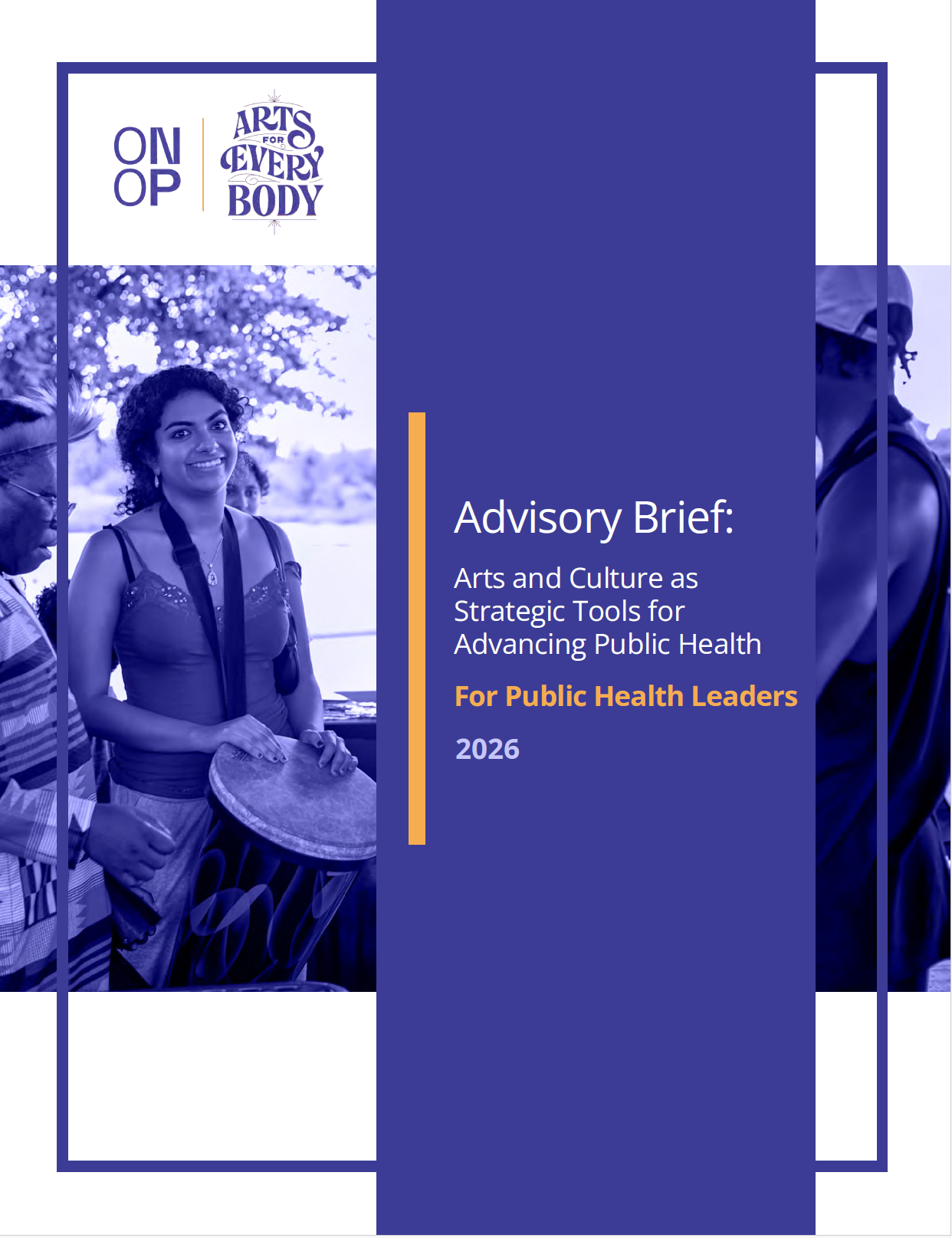
Advisory Brief for Public Health 2026
This advisory brief highlights how arts and culture can serve as strategic public health interventions. ONOP research across 18 U.S. cities found that arts participation can strengthen social cohesion, improve wellbeing, and help address challenges such as mental health, gun violence, chronic disease, and social isolation
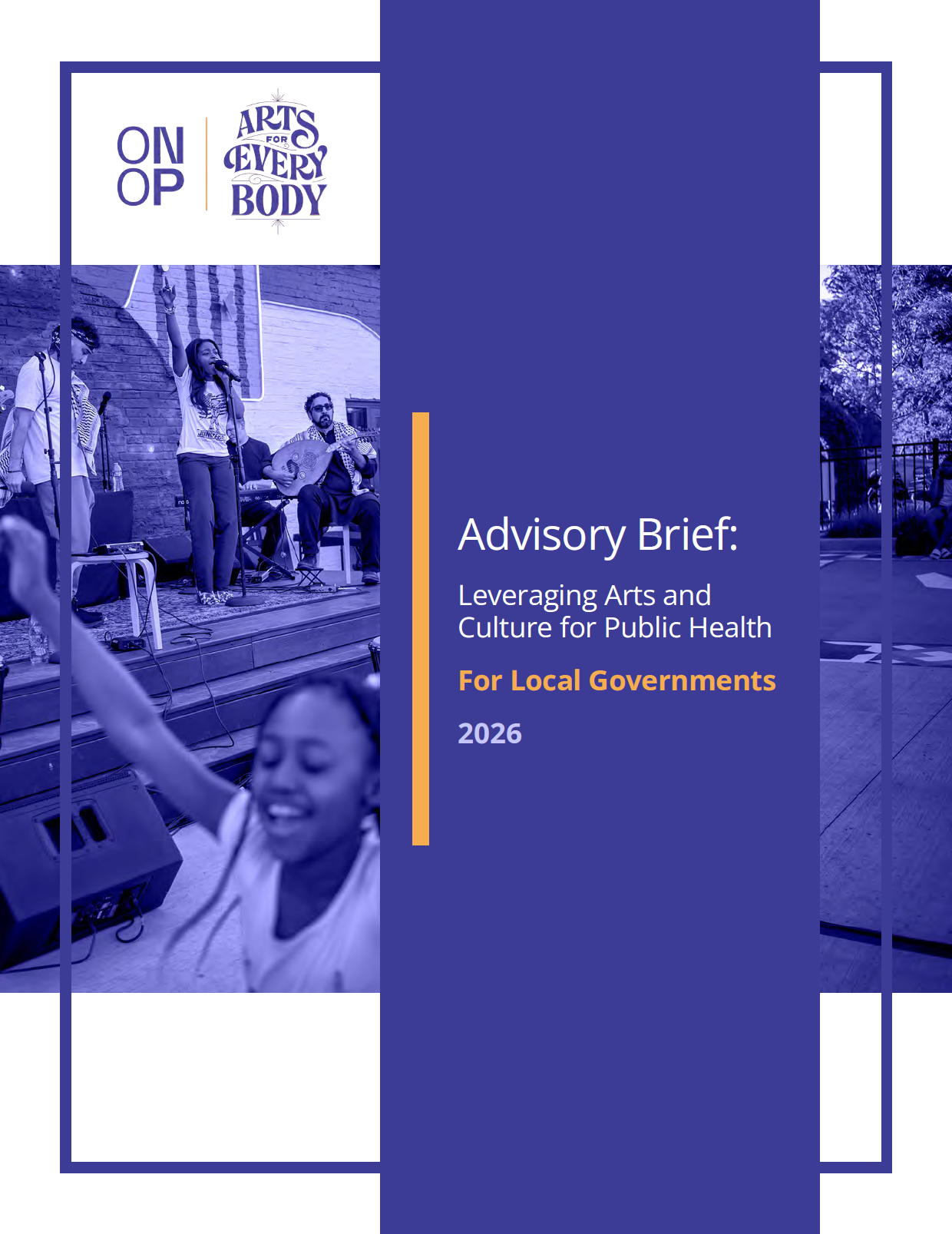
Advisory Brief for Local Governments 2026
This advisory brief highlights how local governments can leverage arts and culture to improve community health and wellbeing. ONOP research across 18 U.S. cities found that arts participation can strengthen social cohesion and support wellbeing while helping communities address challenges such as youth mental health, gun violence, and social isolation. The findings encourage local governments to build cross-sector partnerships and integrate arts and culture into sustainable public health policies, funding, and community initiatives.
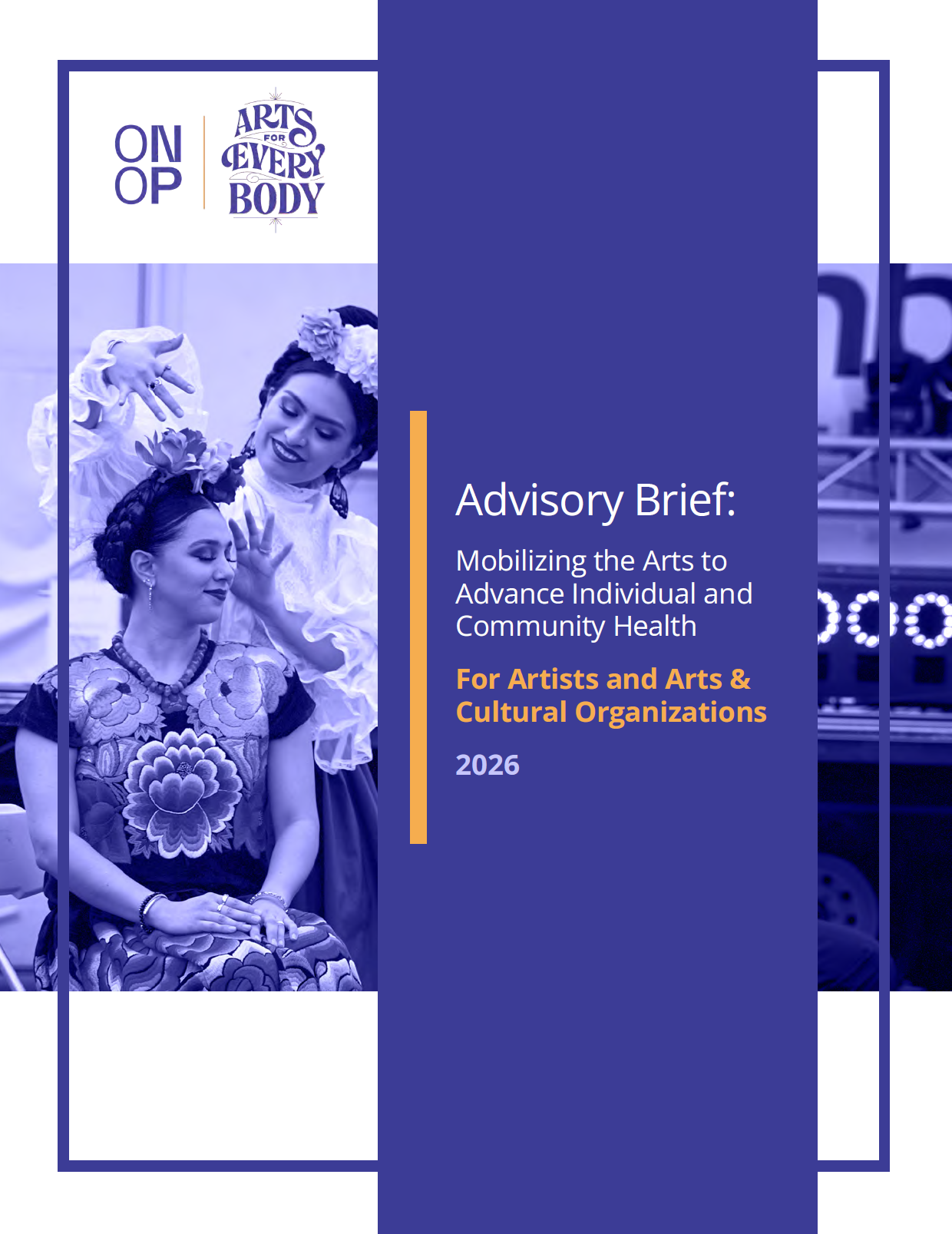
Advisory Brief for Artist and Arts & Cultural Organizations 2026
This advisory brief highlights the role of artists and arts organizations as agents of community health and wellbeing. Research from One Nation/One Project (ONOP) shows that arts participation can support mental health, reduce social isolation, strengthen social cohesion, and help address health inequities. With growing evidence and interest from public health, healthcare, and civic sectors, there is a timely opportunity to expand cross-sector partnerships and advocate for sustainable funding and policies that integrate arts and culture into community health strategies.
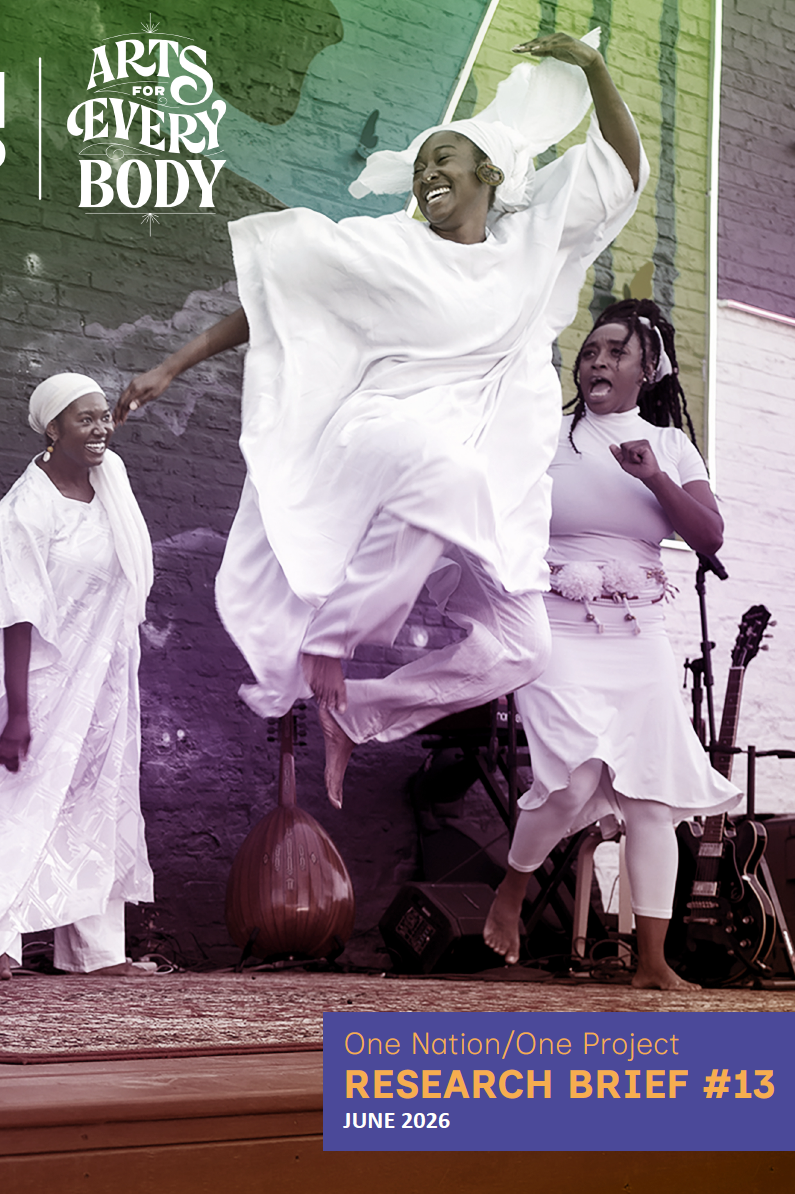
One Nation/One Project Research Brief #13
This research brief presents state-level findings from a national survey examining the relationship between arts participation, social cohesion, and wellbeing across the U.S. Based on responses from more than 10,000 adults, the data is designed to support advocacy for investment in the arts as a tool for strengthening community connection and wellbeing.
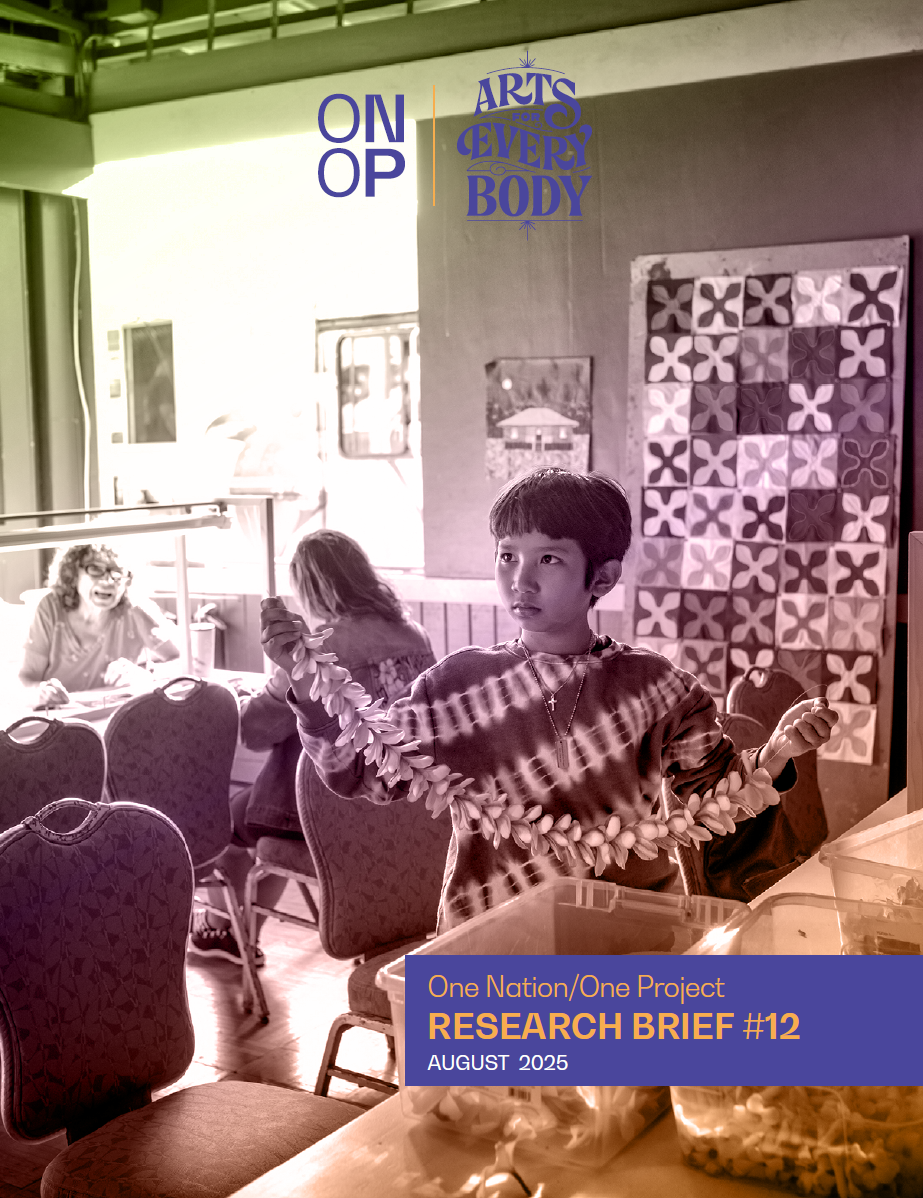
One Nation/One Project Research Brief #12
This research brief explores how communities understand and experience the role of the arts in their lives through participatory murals in Chicago, Seattle, and Hilo. The study highlights themes of liberation, healing, connection, breaking barriers, and creating new possibilities, while also recognizing the time and emotional investment that arts participation can require.
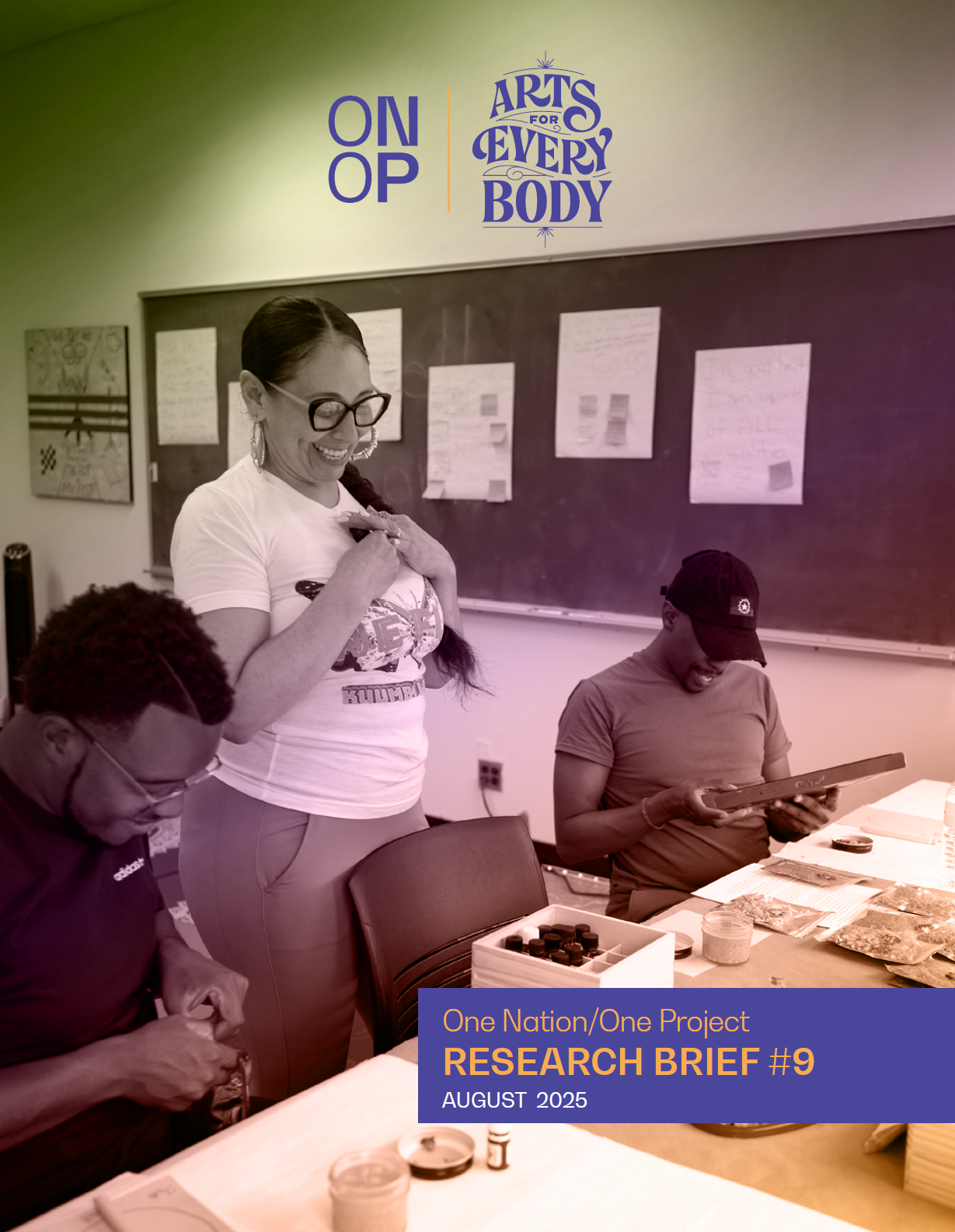
One Nation/One Project Research Brief #9
This research brief explores the relationship between financial compensation and wellbeing among artists who participated in One Nation/One Project across 18 U.S. communities. Using survey data alongside findings from Creatives Rebuild New York, the study examines how employment and compensation may influence artists’ wellbeing.
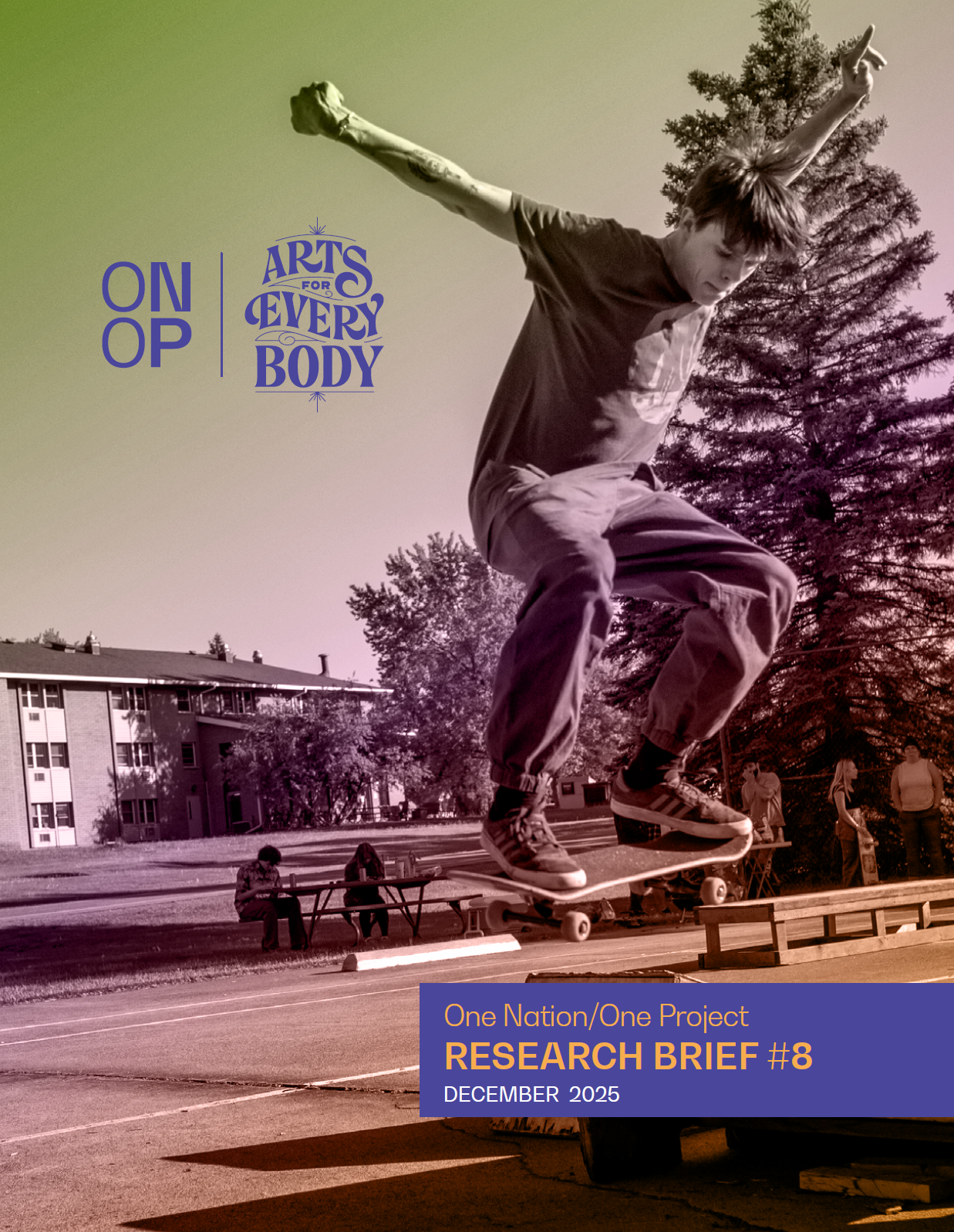
One Nation/One Project Research Brief #8
This research brief examines the relationships between arts participation, social cohesion, and wellbeing across 18 U.S. communities. Part of ONOP’s broader research agenda, the study develops a new theory of change to better understand the outcomes and impact of arts participation on community connection and wellbeing.
One Nation/One Project Research Brief #7
This research brief explores Americans’ perceptions of how arts participation contributes to social cohesion and wellbeing. Based on a national survey, the study examines participation in the arts and beliefs about its impact on individual and community wellbeing.

One Nation/One Project Research Brief #6
This research brief summarizes a three-year interview study of One Nation/One Project's founders and partners, revealing how their diverse backgrounds and evolving experiences shaped the goals, challenges, and collaborative practices of a national arts and health initiative aimed at strengthening community wellbeing.

One Nation/One Project Research Brief #5
This research brief outlines the development, testing, and finalization of a new survey tool by One Nation/One Project to measure how arts participation impacts social cohesion and wellbeing in communities across the U.S. following the COVID-19 pandemic.

One Nation/One Project Research Brief #4
This report summarizes case studies of three ONOP cities that worked to develop arts prescribing programs as a way of making local arts, cultural, nature, and social resources available for the health and well-being of community members.

Pre-Print: Relationships between arts participation, social cohesion, and wellbeing: An integrative review and conceptual model
Currently in pre-print, this study explores the intersection of arts, social cohesion, and wellbeing to guide future public health strategies.

One Nation/One Project Research Brief #2
In 2022 and 2023, One Nation/One Project leaders conducted site visits in nine communities, using sensory exercises to create data poems that reflect each community's unique characteristics, grounding their research in the experiences of community members.

Arts Engagement is a Health Behavior
Rodriguez, A. K., Akram, S., Colverson, A. J., Hack, G., Golden, T. L., & Sonke, J. (2023). Arts Engagement as a Health Behavior: An Opportunity to Address Mental Health Inequities. Community health equity research & policy, 2752535X231175072. Advance online publication. https://doi.org/10.1177/2752535X231175072
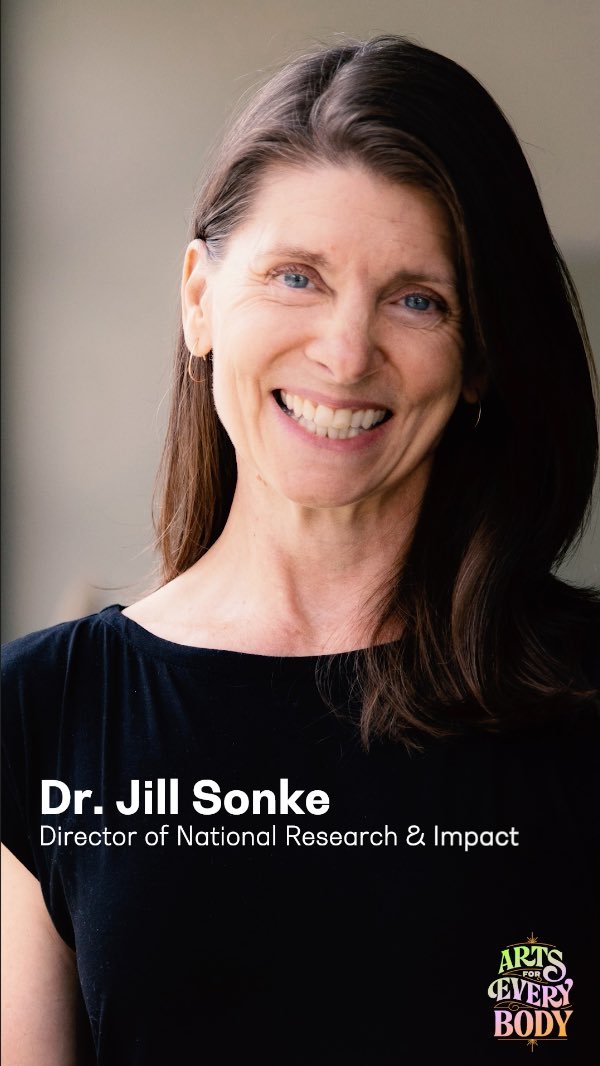
Meet Dr. Jill Sonke, PhD.
Dr. Jill Sonke, PhD, is a leading advocate for the integration of arts and health. As the Founding Director of the Center for Arts in Medicine at the University of Florida, she has been instrumental in advancing the field of arts in healthcare.

Arts and Cultural Engagement, Reportedly Antisocial or Criminalized Behaviors, and Potential Mediators in Two Longitudinal Cohorts of Adolescents.
This study explores the impact of arts and cultural activities on reducing antisocial and criminal behaviors among adolescents, highlighting the role of arts as a public health strategy by enhancing self-control and fostering positive attitudes in over 25,000 U.S. teens.